

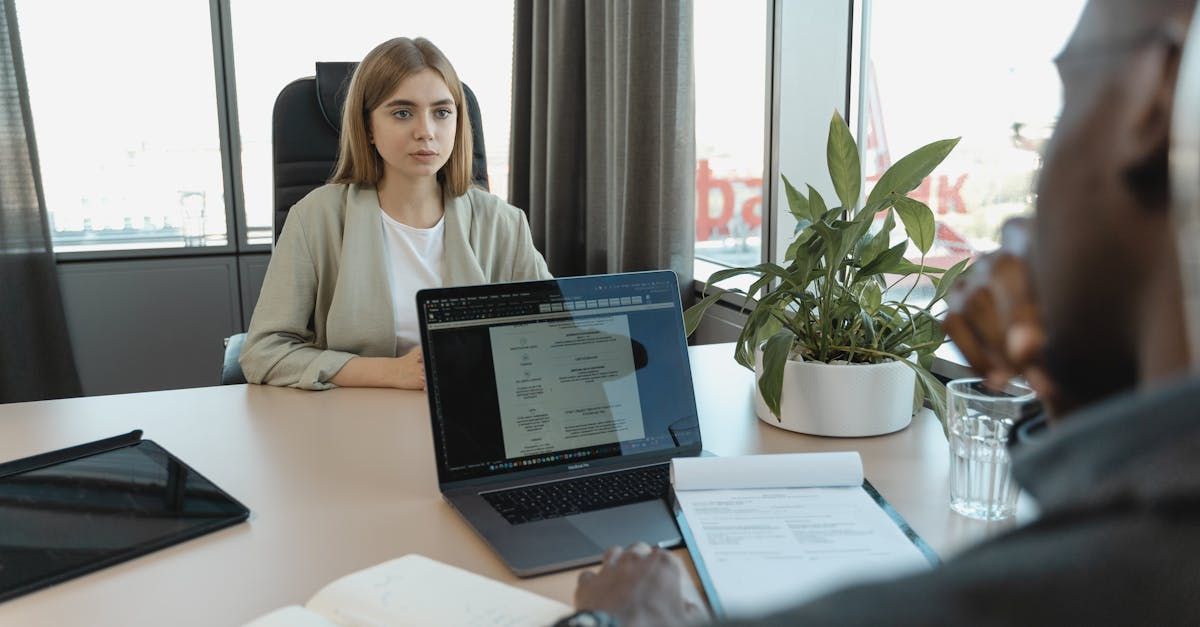
If you got an interview invite from ISB, INSEAD, Booth or HBS this week and you are sitting at 1 a.m. scrolling through a 200-question Google Doc trying to memorise everything, the honest answer is this: nobody has ever cleared an MBA interview by memorising 200 answers, and you do not need to. Almost every question you will face falls into one of four buckets. Once you know the buckets, the prep stops feeling like a swamp. This post lays out the four mba interview questions types Indian applicants actually face, with five real examples in each, drawn from the Clear Admit interview reports archive and our 13 years of debriefs at Pegasus Global Consultants.
Bucket 1: Past, the resume walkthrough
This is where almost every interview opens, and where most candidates lose ten minutes they cannot get back. The interviewer wants a 90-second tour of how you got from undergrad to today, with a coherent thread, not a chronological dump. At Booth and INSEAD it is sometimes the only past-focused prompt you will get, since INSEAD alumni interviews often work off your resume rather than your full file.
Five real prompts you should be able to answer in under 120 seconds:
- Walk me through your resume.
- Why did you pick engineering over commerce after Class 12?
- Why did you stay at TCS for four years before switching?
- Tell me about your role at your current company in one paragraph.
- What does a typical Tuesday at work look like for you?
Indian failure modes here are predictable. We over-explain school names and CGPA, we apologise for tier-2 colleges, we list every project. Cut all of it. The interviewer wants the inflection points and the why behind each move, not the org chart.
Bucket 2: Future, goals and why MBA
The second bucket is the one Adcoms care about most for round-2 fit decisions. Expect short-term and long-term goal questions, the standard "why MBA, why now, why this school" trio, and a sanity check on whether your post-MBA plan is even possible from this programme.
Five prompts to rehearse:
- What is your short-term post-MBA goal, and what is your long-term goal?
- Why MBA, and why now in your career?
- Why this school over the other programmes you are considering?
- Which clubs, classes or professors at our school excite you?
- Plan B, what if your target industry does not recruit you?
For Indian applicants targeting US M7 from a tech services background, the Plan B question is where most people freeze. Have a real fallback that uses the same MBA muscle, not a vague "I will figure it out".
Bucket 3: Behavioural, STAR-format stories
Roughly 40% of Stanford and HBS interview time goes to behavioural prompts, per Fortuna's GSB interview prep guide. This is the bucket where the STAR method, Situation, Task, Action, Result, was designed for. Build 8 to 10 stories from your last 4 years of work and personal life that map across leadership, conflict, failure, ambiguity and influence.
Five prompts that recur across debriefs:
- Tell me about a time you led a team that did not want to be led.
- Describe a time you failed and what you learned.
- Tell me about a conflict with a peer or manager and how it ended.
- Describe a time you had to make a decision with incomplete information.
- Tell me about a time you influenced someone without authority over them.
Most Indian applicants come in with leadership stories where everything went well. That reads as a candidate who has not been stretched. Pick at least two stories where the outcome was mixed or bad, and own the lesson cleanly.
Bucket 4: Fit, school-specific and curveballs
The fourth bucket is where each school's culture shows up. ISB asks current-affairs and India-context questions because half their cohort recruits domestically. INSEAD probes international exposure and language flexibility. Wharton runs a Team-Based Discussion instead of a behavioural interview, where fit is judged through how you collaborate with five strangers on a 35-minute prompt. HBS interviewers go off-piste based on something they read on page 4 of your application.
Five real examples from Indian-applicant debriefs over the last 24 months:
- ISB: Pick one current event in Indian banking and tell me what you would do if you were the regulator.
- INSEAD: You have lived in Bengaluru your whole life, how will you cope with 70 nationalities in a 10-month programme?
- Booth: Walk me through how you would size the market for premium yoghurt in tier-2 India.
- Wharton TBD: Your team has 35 minutes, choose one of these three pre-read scenarios, agree on a recommendation, and present it.
- HBS: You wrote in your essay that you almost left your job in 2024, what stopped you?
You cannot prep these line by line. What you can prep is a calm, structured speaking style, an opinion you actually hold on 3 to 4 current Indian business stories, and a 60-second self-introduction that does not collapse under follow-up.
If you are an IT services engineer targeting US M7
Your interview risk is the goals bucket, not the behavioural one. Adcoms have read 400 SOPs from candidates with the same TCS or Infosys headline this season. Make sure your "why MBA, why now" answer points at a specific, named function (product management at a SaaS firm in Austin, not "tech leadership"), and that your behavioural stories show you operating outside the standard delivery treadmill, hackathons, internal product builds, client-facing pitches.
If you are a CA or finance professional targeting European programmes
Bucket 4 is your risk. INSEAD and HEC Paris will probe whether you can survive a 10-month programme in 7+ languages and a cohort that is 60% non-finance. Build stories that show cross-functional and cross-cultural work, not a string of audit engagements. Prep one anecdote about working with a non-finance team where you had to translate a P&L into product or operations language.
If you are a reapplicant or have a one-school ding from last year
Expect a direct question on what you changed since last application, in every interview. Treat this as a goals-bucket question, not a defensive one. Name two specific things you improved, GMAT score, scope of role, a new external initiative, and one thing you reframed in how you tell your story. Vague answers ("I matured") are a fast way to a second ding.
What this means for Indian applicants
The four-bucket frame is not a magic key, it is a workload reduction tool. Most candidates who walk into our interview prep service at WePegasus arrive with a 250-line question list and a panic spreadsheet. We compress that list into four buckets, build 8 stories that flex across behavioural prompts, write a 90-second resume walkthrough, and run two recorded mocks with timestamped feedback. The shift from "I have 250 questions to memorise" to "I have 4 buckets and 8 stories" is what makes interview week sleepable.
Indian applicants in particular underprepare for the goals bucket because we treat it as obvious. It is not obvious to the interviewer. A US adcom in 2026 has read 50 essays this week from Indian engineers wanting to "transition to product management at a tech firm". Specificity and one named role at one named company is what wins this bucket.
For longer reading on the prep side, see our companion piece on how to evaluate your MBA profile before you sit for the interview, since most interview weakness is profile weakness in disguise.
Common questions applicants are asking
How long is a typical MBA interview? Booth, Wharton (1-on-1 fallback), Kellogg and INSEAD are 30 to 45 minutes. HBS is exactly 30 minutes plus a 5-minute optional reflection. Wharton TBD is 35 minutes group plus a short solo at the end. ISB is 20 to 30 minutes with two interviewers.
Are MBA interviews blind in 2026? HBS and ISB are non-blind, your interviewer has read your full application. Booth and most Wharton 1-on-1 interviews are resume-only. INSEAD alumni interviewers will have your CV and any guidance the school sent, but rarely your essays.
What should I wear to a Zoom MBA interview? Business formal on top, decent lighting from a window or a ring light, and a plain background. Booth, Wharton and INSEAD interview reports show that 2 of every 10 candidates lose marks on basic camera setup, not on content.
Should I prepare different stories for behavioural questions at different schools? No. Prepare 8 to 10 strong stories and learn to flex each one across 2 to 3 prompts. The same project that shows leadership at HBS can show ambiguity at Stanford and influence-without-authority at Booth, with different opening framing.
What is the most common reason Indian applicants get dinged after the interview? Two patterns dominate our debriefs: a goals answer that sounded generic across all 4 schools the candidate interviewed at, and a behavioural answer where the candidate is the only hero in every story. Both are fixable in 2 mock rounds.
Related reading
- How Do I Answer 'Walk Me Through Your Resume' in an MBA Interview Without Rambling?
- MBA Interview Behavioural Questions: The 15 Indian Applicants Should Rehearse
- Self Introduction in MBA Interview: The 90-Second Answer Structure That Lands
- INSEAD MBA Interview: The Alumni Format and What Indian Applicants Miss
- MBA Interview Body Language: What Adcoms Read in the First 30 Seconds
- Service: Interview Prep Service
- Service: Profile Evaluation at WePegasus
- F-1 Visa Interview Got Two New Questions on April 28: How Indian MBA and MS Applicants Should Prepare
- Finance MBA Interview Questions: The Question Types Indian Applicants Must Prep
- How to Justify a Gap Year in an MBA Interview: Honest Framings That Do Not Damage Your Profile
- ISB Interview Questions: The 50 Indian Applicants Actually Face in 2026